Choose resolution, lens, night performance, placement, and recording around the details the scene must preserve.
PROFESSIONAL VS CONSUMER SECURITY
Buy a system designed to protect the scene—not just send a notification.
Professional security cameras are built around evidence quality, reliable recording, controlled networking, expandable systems, documented specifications, and accountable support. This guide explains where those differences matter and where a simpler consumer camera may still be enough.
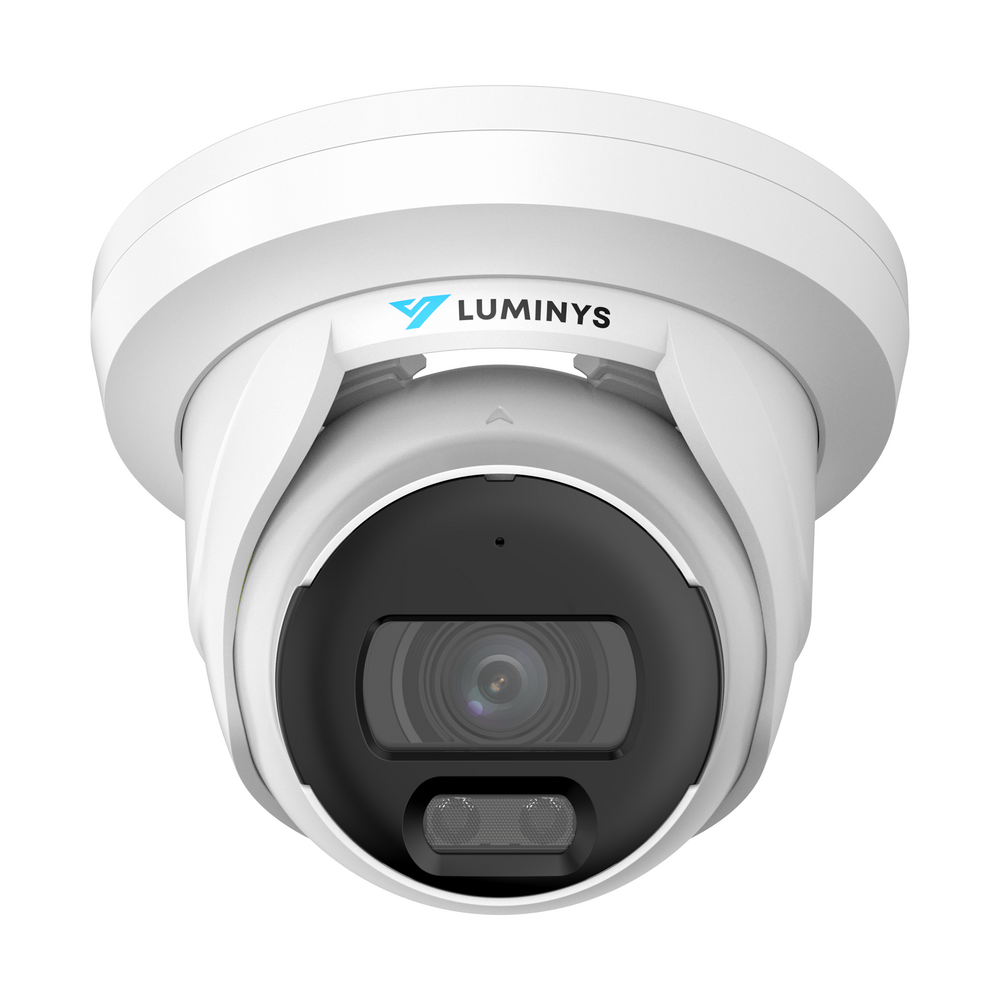
An NVR-centered design can retain continuous or event video locally without making a cloud subscription the only recording path.
PoE networking, recorder channels, standard cabling, mounts, and accessories support multi-camera growth.
Documented models, account-linked orders, warranty service, and knowledgeable setup help reduce dead ends.
Professional and consumer cameras solve different problems.
A consumer camera often prioritizes fast app setup, a small footprint, cloud notifications, and one or two general-purpose views. A professional video-surveillance system prioritizes the complete evidence chain: camera placement, image detail, dependable recording, retention, user permissions, event search, serviceability, and expansion.
“Professional” is not a magic label. Compare the exact model, datasheet, seller, firmware path, recorder, warranty, and support arrangement. A well-specified system is more valuable than a recognizable category name.
Decision areaProfessional IP systemTypical consumer camera
Recording
NVR or managed local recording, often continuous plus event search
Frequently app- and cloud-centered; local options vary
System size
Designed for coordinated multi-camera coverage and expansion
Often optimized for a few standalone devices
Cabling
PoE can carry data and power on one Ethernet run
Wi-Fi plus nearby power is common
Selection
Multiple housings, lenses, low-light options, analytics, and mounts
Fewer scene-specific choices
Administration
Recorder permissions, network configuration, exports, and service tools
Simplified mobile-app controls
Support
Dealer, integrator, manufacturer documents, and defined warranty path
Varies widely by brand and marketplace seller
Why modern professional systems usually start with IP and PoE.
An IP camera is a network device that sends digital video and metadata over Ethernet. With Power over Ethernet, a compatible switch or NVR can deliver power and data through the same cable. This simplifies multi-camera cabling, centralizes power, and creates a practical path for high-resolution video, analytics, remote configuration, and future expansion.
- Image and metadata: IP systems can carry high-resolution streams plus events and analytics metadata.
- Interoperability: ONVIF Profile T describes IP-video functions including H.264/H.265 streaming, imaging settings, motion and tampering events, metadata streaming, HTTPS streaming, and supported audio or PTZ functions.
- Serviceability: Devices can be inventoried, configured, updated, and monitored over a controlled network.
- Scalability: Add cameras within recorder, switch, storage, and network limits instead of redesigning each standalone view.
Analog still has legitimate uses, especially when existing coax is valuable or a limited retrofit needs to avoid recabling. IP also requires good cybersecurity: unique credentials, authorized firmware updates, appropriate permissions, and a protected network. The best system is the one properly specified and maintained for the site.
The cheapest camera is not always the lowest-cost system.
Purchase price is only one part of cost. Also consider replacement labor, subscriptions, storage, lost footage, app or platform dependence, mounting, weather exposure, update support, and who will help when the system needs service. Professional equipment can justify a higher initial cost when dependable evidence and long-term service matter.
Scene-specific optics
Fixed or varifocal lenses, low-light designs, turret, dome, bullet, PTZ, panoramic, and specialty cameras let the hardware match the view.
Documented durability
Model-specific IP weather ratings and IK impact ratings help compare environmental suitability; the datasheet controls.
Searchable video
Supported analytics can narrow motion, people, vehicles, lines, zones, or other events instead of forcing a manual review of every minute.
Accountable service
Known model numbers, serials, invoices, firmware sources, and seller warranty terms create a usable service trail.
Do not judge a security product by a listing photo.
Amazon, eBay, and other marketplaces can contain both legitimate authorized products and listings with unclear origin or support. Before buying any security camera, confirm:
- The legal manufacturer and exact model number are stated.
- The seller is authorized or clearly accepts warranty responsibility.
- A current datasheet and installation documentation exist.
- Firmware updates come from a verifiable source and the support period is understood.
- The U.S. warranty, return address, and support contact are real and written.
- NDAA, FCC, ONVIF, environmental, or safety claims are supported by model-level or manufacturer documentation—not only an icon in the listing.
- The camera, recorder, mounts, power, storage, and intended analytics are specified as a complete system.
NIST’s IoT guidance identifies device identification, configuration, data protection, logical access, software updates, and cybersecurity-state awareness as core considerations. Those questions are useful for both consumer and professional connected cameras.
Professional products with a purchasing record that stays useful.
- Five-year limited warranty on eligible hardware, with published shipping responsibilities.
- Order history, warranty requests, tracking, and support linked to the customer account.
- Manufacturer PDFs, current model identifiers, product images, specifications, and compliance references.
- Camera, NVR, accessory, AI-feature, and system-planning tools.
- Optional remote programming and live system training after installation.
- Dealer support for qualified security professionals with approval-based protected pricing.
Professional camera system FAQ
Are professional security cameras always better than consumer cameras?
Not for every use. A simple consumer camera can be appropriate for a renter, a single indoor room, or a low-risk convenience view. Professional equipment becomes more valuable when dependable local recording, multiple cameras, business operations, longer service life, controlled networking, detailed evidence, or ongoing support matter.
Are IP security cameras better than analog cameras?
IP systems usually offer a stronger path for high resolution, PoE cabling, analytics, system expansion, remote administration, and standards-based integration. Analog can remain useful for reusing existing coax or completing a limited retrofit. The right answer depends on the site, cabling, objectives, and budget.
Does buying from Amazon or eBay automatically make a camera unsafe?
No. The marketplace alone does not determine quality. Verify the actual manufacturer, authorized seller, model number, firmware support, warranty owner, return terms, compliance documents, and whether the product is intended for the U.S. market before purchasing.
What should I verify before buying a professional camera system?
Confirm the scene, resolution, lens, night performance, audio needs, environmental rating, recorder channels, storage, analytics, manufacturer documentation, seller support, warranty terms, and the exact models in the order.
Standards and cybersecurity references
These sources support the technical and cybersecurity framework used in this guide. Product-specific capabilities still depend on the current manufacturer datasheet.
ONVIF Profile TAdvanced IP-video streaming, metadata, HTTPS, motion, tampering, audio, and PTZ functions ↗NIST IR 8425Consumer IoT product cybersecurity baseline ↗NIST IR 8259AIoT device cybersecurity capability core baseline ↗NIST IoT capability catalogIdentification, configuration, data protection, access, updates, and state awareness ↗